
Summer brings warmer temperatures, longer days, and more time spent outdoors. It also marks the…
Signs of Mice in Your Home in South Carolina
Mice are one of the most common and destructive household pests affecting homeowners across South Carolina. Due to their small size and ability to remain hidden, infestations often go undetected until they become a serious problem.
Recognizing the early signs of mice in your home is essential to preventing costly damage in your home, any contamination, and any potential health risks. In South Carolina, where seasonal changes and mild winters allow rodents to remain active year-round, early detection is even more critical than some other states.
This guide will help you identify the most common signs of a mouse infestation, understand why homes in South Carolina are especially vulnerable, and take the right steps to eliminate the problem quickly.
For full-home protection against rodents and other pests, explore our Pest Control Services
Why Mice Are a Common Problem in South Carolina
South Carolina’s climate creates an ideal environment for rodents. Unlike colder northern states, mice in this region remain active throughout the year, continuously searching for food, water, and shelter.
During cooler months, mice move indoors to escape temperature drops. In warmer seasons, they continue to reproduce rapidly, often expanding their nesting areas inside walls, attics, and crawl spaces.
Common factors that attract mice to homes in South Carolina include:
- Small openings around foundations, vents, and utility lines
- Accessible food sources such as pantry goods and pet food
- Moisture issues in crawl spaces or basements
- Dense vegetation or debris near the home’s exterior
Routine pest control is one of the most effective ways to reduce risk.
Learn more about preventative General Pest Control Services:
Top Signs of Mice in Your Home
Mouse Droppings
Mouse droppings are one of the most obvious and immediate signs of an infestation. They are small, dark, and shaped like grains of rice.
You are most likely to find droppings in:
- Kitchen cabinets and drawers
- Pantry shelves and food storage areas
- Along baseboards and corners
- Behind appliances such as refrigerators and stoves
The presence of fresh droppings typically indicates active mice in the area.
Scratching or Scurrying Noises
Mice are nocturnal, which means they are most active at night. Many homeowners first notice an issue by hearing movement after dark.
Common sounds include:
- Scratching inside walls
- Movement in ceilings or attics
- Light squeaking or gnawing noises
These sounds often indicate nesting activity or movement between feeding areas.
Gnaw Marks and Structural Damage
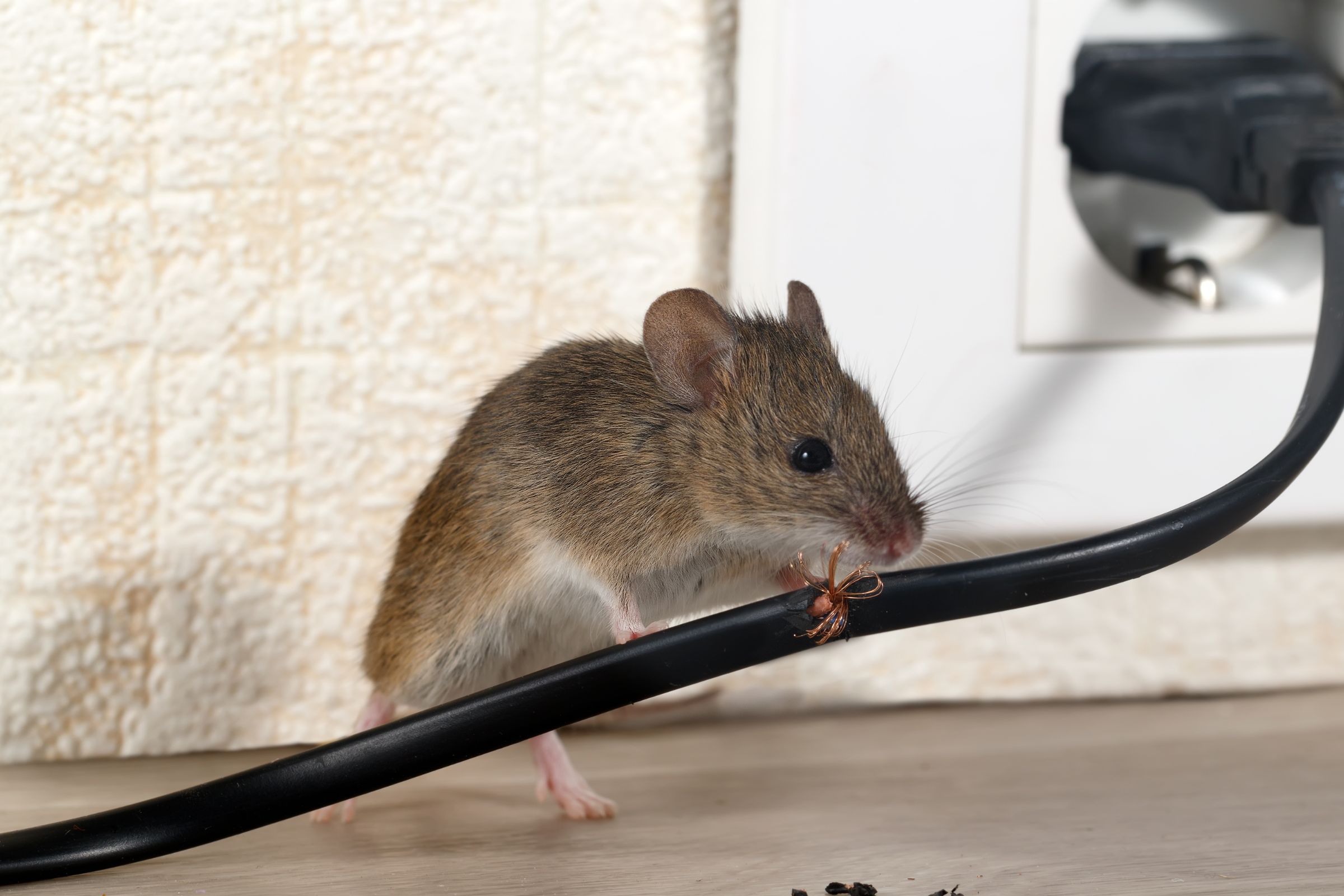
Mice constantly chew to keep their teeth from overgrowing. This behavior can lead to visible damage throughout your home.
Look for:
- Chewed food packaging
- Damaged drywall or wood
- Gnawed electrical wiring, which can create fire hazards
This type of damage is a strong indicator of an established infestation that requires immediate attention.
Grease Marks and Travel Paths
As mice travel along the same routes repeatedly, they leave behind grease marks from their fur.
Signs include:
- Dark smudges along walls and baseboards
- Visible pathways in dusty areas
- Tracks or footprints in less disturbed spaces
These markings often lead directly to nesting or entry points.
Nesting Materials
Mice build nests using soft, shredded materials found throughout the home.
Common nesting materials include:
- Paper and cardboard
- Fabric and insulation
- Dry plant matter
Nests are typically hidden in:
- Attics
- Wall voids
- Storage boxes
- Behind large appliances
Finding a nest usually means the infestation is well established.
Food Damage and Contamination
Mice contaminate far more food than they consume. Even small infestations can lead to significant waste and health concerns.
Signs include:
- Opened or chewed food packaging
- Bite marks on stored goods
- Food crumbs or debris in unusual locations
Contaminated food should always be discarded immediately.
Strong Musty Odors
A persistent, musky odor is often associated with mouse infestations. This smell comes from urine, droppings, and nesting areas.
In more severe cases, a strong odor may indicate a dead rodent hidden within walls or ceilings.
Why You Should Not Ignore a Mouse Infestation
Ignoring the signs of mice in your home can lead to serious consequences. Mice reproduce rapidly, and a small problem can quickly escalate into a full infestation.
Potential risks include:
- Spread of bacteria and allergens
- Contamination of food and surfaces
- Electrical hazards from chewed wiring
- Structural damage to insulation, wood, and drywall
If you notice multiple signs, it is important to act quickly. Our Professional Rodent Wildlife Control Services can identify the extent of the problem and provide long-term solutions:
How to Prevent Mice in Your South Carolina Home
Preventing mice starts with eliminating the factors that attract them. A proactive approach can significantly reduce the likelihood of an infestation.
- Seal Entry Points
Inspect your home for small gaps and cracks. Mice can enter through openings as small as a dime. Seal gaps around doors, windows, pipes, and vents. - Eliminate Food Sources
Store all food in airtight containers and clean up crumbs or spills immediately. Avoid leaving pet food out overnight. - Reduce Clutter
Keep storage areas organized and minimize clutter that can provide hiding or nesting areas. - Maintain Outdoor Areas
Trim shrubs and vegetation away from your home. Keep firewood and debris stored at a distance from the foundation.
When to Call a Professional Pest Exterminator
While some homeowners attempt to handle mice on their own, infestations often require professional intervention to fully resolve.
A professional pest control service can:
- Identify entry points and nesting areas
- Remove existing infestations safely
- Implement preventative measures to stop future problems
If you suspect mice in your home, scheduling an inspection is the most effective way to protect your property long term.
Frequently Asked Questions
What are the first signs of mice in your home?
The most common early signs include droppings, scratching noises at night, and small gnaw marks on food packaging or household materials.
Are mice a common problem in South Carolina homes?
Yes. Due to the mild climate, mice remain active year-round in South Carolina, making infestations more likely without preventative measures.
How quickly can mice infest a home?
Mice reproduce rapidly. A single pair can lead to dozens of mice within a few months if not addressed.
What attracts mice to homes in South Carolina?
Food availability, warmth, moisture, and accessible entry points are the primary factors that attract mice indoors.
Should I call a professional for mice?
Yes. Professional pest control ensures the infestation is properly identified, removed, and prevented from returning.
Mice Infestation in SC
Mice infestations are a serious concern for homeowners in South Carolina. By understanding the warning signs and acting quickly, you can prevent extensive damage and protect your home.
If you suspect mice in your home, do not wait for the problem to worsen. Taking action early is the most effective way to maintain a safe and pest-free environment.
Contact Us today if you have further questions about mice infestations in SC, or are looking for removal services.
Related Posts